
Showing posts with label neuropathologists. Show all posts
Showing posts with label neuropathologists. Show all posts
Tuesday, March 21, 2023
Dr. Diamandis develops network to help pathologists interface with AI computational scientists


Monday, March 15, 2021
Glioma diagnostics and research in JoVE
I recently received an email from Chun-Chieh (Paul) Lin and George Zanazzi at Dartmouth-Hitchcock Medical Center. They were invited as editors for a new Methods Collection in JoVE focusing on "Glioma diagnostics and research". Dr. Lin and Zanazzi write: "We intend to highlight techniques used in the diagnostic classification of glial neoplasms and also in vivo or in vitro glioma research models. We welcome a variety of submissions covering these challenging but interesting neoplasms." Please feel free to contact Paul (Chun-Chieh.Lin@hitchcock.org) and George (George.J.Zanazzi@hitchcock.org) for details!
 |
| Dr. Paul Lin |
 |
| Dr. George Zanazzi |
Tuesday, April 14, 2020
J. Hume Adams has passed away
 |
| J. Hume Adams in 1972 |
Sunday, April 5, 2020
Neuropathologist Matija Snuderl featured in major journal discussing the use of artificial intelligence in cancer diagnostics
 |
| Matija Snuderl, MD |
Thanks to Dr Snuderl for representing the important role neuropathologists play in cancer diagnostics in the age of molecular medicine and article intelligence. Thanks also to Dr. Michael Lawlor, of the Medical College of Wisconsin, for alerting me to this article!
Monday, March 23, 2020
George Perry, former AANP president, granted meritorious award by the American Society for Investigative Pathology
 |
| George Perry, PhD |
Congratulations, Dr. Perry. And thanks to Dr. Charles White for sharing this news.
Tuesday, March 10, 2020
David Solomon and Gregory Fuller garner prestigious awards at USCAP annual meeting
 |
| David Solomon, MD, PhD |
Also at this year's USCAP meeting, Gregory N. Fuller, MD, PhD was awarded the Harvey Goldman Teaching Award. Among his many contributions to pathology education is authoring the CNS chapter of the latest edition of the textbook Histology for Pathologists (2019).
Monday, November 18, 2019
First evidence of immune response targeting brain cells in autism
 |
| Dr. Matt Anderson |
In a paper published in Annals of Neurology, Harvard neuropathologist Matthew Anderson, MD, PhD, and colleagues, report the presence of cellular features consistent with an immune response targeting specialized brain cells in more than two-thirds of autistic brains analyzed postmortem.
These cellular characteristics—not previously observed in autism—lend critical new insight into autism’s origins and could pave the way to improved diagnosis and treatment for people with this disorder.
Read more here.
Tuesday, November 12, 2019
Featured Neuropathologist: Eddie Lee, MD, PhD
 |
| Edward B. Lee, MD, PhD |
1. Why did you decide to become a neuropathologist?
The three major topics that dominate Alzheimer’s disease
research are amyloid, tau, and neuroinflammation. The discovery of
genetic mutations that cause AD or related dementias, and more recent GWAS
studies support the idea that these three are perhaps the most important
factors that drive AD pathophysiology. However, it is sometimes forgotten
that these were first and foremost neuropathologic observations discovered by
studying human tissues using histology and/or biochemistry by George Glenner
and the McGeers. Genetics came later and was made possible by the
neuropathology. The same can be said regarding TDP-43. This taught
me that neuropathology can be a rock solid foundation for building a research
career. I have always been drawn to basic biomedical research but think
that clinical training provides a sort of “compass” by which you can guide your
research program. To this day, the foundation of my research is
neuropathology because it grounds me towards studying the disease itself.
2. Name a couple of important professional mentors.
Why were they important to you?
I did my PhD with Virginia Lee at University of
Pennsylvania. She has been doing research for decades together wither her
life partner, John Trojanowski. Together, I saw the two of them
seamlessly integrate neurodegenerative disease neuropathology with basic
science. In terms of neuropathology, I point to many with whom I have been
privileged to train, including Nicholas Gonatas, Bill Schlaepfer, John
Trojanowski, Zissimos Mourelatos, Lucy Rorke-Adams, Jeff Golden and Alex
Judkins.
3. What advice would you give to a pathology resident interested in doing a neuropathology fellowship?
3. What advice would you give to a pathology resident interested in doing a neuropathology fellowship?
Get to know what neuropathologists do. There is a wide
variation of career paths available for neuropathologist, and the most
important thing for you to figure out is what kind of neuropathologist you
might want to become. This is key because this should be what is guiding
your choice in neuropathology fellowship. So figure out what your ‘local’
neuropathologist does, and look nationally for what other neuropathologists are
doing.
For those who are interested in a more basic science track
neuropathology career, here is a historical perspective. Since the
beginning of academic medicine, there has been a tension between the
reductionist approach where medicine is a branch of science (supported by
people like Flexner and Welch) versus a more humanistic approach where medicine
is an art (supported by people like Peabody and Osler). For Peabody and Osler,
clinical observation and pathologic correlation was tantamount. In
contrast, the reductionists thought that “by the end of the [19th]
century, clinicopathologic correlation was reaching the limits of its
explanatory possibilities.” I will say that this sentiment is still very
much alive in many corners of biomedical research. I urge you to try to think
mechanistically as much as possible, to strive to understand not only pathology
but pathophysiology.
4. What city would you like a future American Association of Neuropathologists meeting to be held and why?
4. What city would you like a future American Association of Neuropathologists meeting to be held and why?
Interesting question for me as I am currently the Assistant
Secretary Treasurer for AANP and so I help identify and select the AANP meeting
sites. There is a lot that goes into the decision. We have done our
best to maintain a reasonable cost for attendees. There are many sites
that are excluded, often from more popular locations, because the cost for
attendees would be significantly higher not only for AANP but for people
booking rooms. We also look at whether anyone in the US can fly to the
site with at most one layover, whether there are sufficient restaurants close
by, etc. These factors greatly reduce the number of sites that are
possible. I helped pick Monterey, CA for the 2020 meeting for which I am
super psyched. A big question that it would be good to ask everyone is
where to have the 2024 meeting which will be the 100th AANP
meeting. We will be choosing the site in the next year or so. One
thought is to go expensive/luxurious (Hawaii anyone?) vs. traditional/historic
(Atlantic City, NJ which is where the original AANP meetings were
held).
Thursday, November 7, 2019
Forensic neuropathologist featured in AMA’s “Shadow Me” Specialty Series
 |
| Michelle Jorden, MD |
Dr.Michelle Jorden, chief
medical examiner for the county of Santa Clara in California, was recently
featured in the American Medical Association's "Shadow
Me" Specialty Series.
Dr. Jorden has been employed in Santa Clara County since 2008. She obtained her medical degree from Northwestern, and did her anatomic and neuropathology training at Stanford. She did her fellowship in forensic pathology at the Cook County Medical Examiner’s Office in Chicago.
Friday, October 25, 2019
In Memorium: Carol Petito, MD (1942-2018)
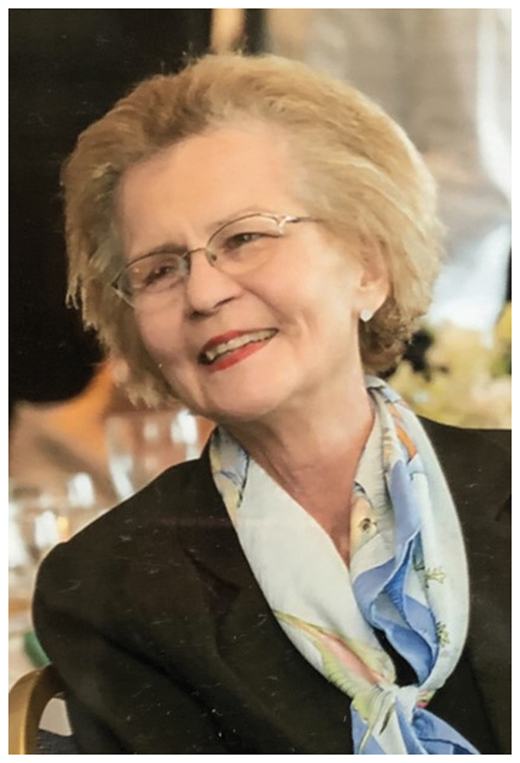 |
| Carol Petito, MD |
Carol Petito, a significant and distinctive member of the international neuropathology community, passed away on December 15, 2018 of a cancer she had been battling for 8 years.
Carol was born January 8, 1942 in Long Island, NY, the oldest of Charles and Marita Kaiser’s 3 children. She graduated with a BS from Tufts University and received her MD from Columbia University, College of Physicians and Surgeons in 1967, one of 10 women in a graduating class of 116. An internship at Bellevue Hospital was followed by residency in Pathology at The New York Hospital Cornell University Medical College and fellowships in neuropathology at Newcastle General Hospital in Newcastle-on-Tyne, England and with Ken Earle at the Armed Forces Institute of Pathology in Washington, DC.
After spending 1973–1992 on the faculty at The New York Hospital of Cornell University Medical College, becoming Professor in 1984, Carol moved to Miami in 1992 following her marriage to Michael Norenberg, a well-known and respected neuropathologist whom Carol had known for many years. She was a Professor of Pathology at Jackson Memorial Hospital of the University of Miami School of Medicine until her death.
A “triple threat,” Carol was equally and excellently competent at research, teaching and diagnosis. Her diagnostic abilities were especially remarkable considering that she lost an eye in a childhood accident but was never hindered by this. Her research productivity was augmented by the 26 grants she received at various times in her career. And her success as a teacher is well documented by her heavy schedule of medical and graduate student lectures, course directorships and several teaching awards. She was also Director of the University of Miami’s Pathology Residency Program for 10 years.
Thursday, October 24, 2019
Brown announces new director of neuropathology
 |
| Ivana Delalle, MD, PhD |
After earning her MD and PhD from Zagreb University in Croatia, Dr. Delalle joined the developmental neurobiology laboratory directed by Verne Caviness at the Massachusetts General Hospital (MGH). She then completed her residency in anatomic pathology and fellowship in neuropathology at MGH, after which she joined the faculty at MGH. She subsequently moved on to Boston University. Dr. Delalle starts work at Brown on November 1, 2019.
Thursday, September 19, 2019
Edward Stopa, long-time neuropathologist at Brown University, passes away
 Edward Stopa, MD, 65, after a brief and courageous battle with pancreatic cancer. He touched many lives and served as mentor to many in neuropathology, including me. Since 1993, Ed was the director of neuropathology at Brown and led the division until his retirement earlier this year. I was a neuropathology fellow under his directorship from 2004-06 and fondly remember his sense of humor, curiosity, and joie de vivre.
Ed made many strides in the understanding of Alzheimer disease through close collaborations with basic and clinical neuroscientists. He contributed extensively to our knowledge of the hypothalamic mechanisms that are responsible for human reproduction and circadian rhythm.
We will miss you, Ed.
Monday, June 17, 2019
Dr. Hilary Nickols: neuropathologist and artist
 |
| Hilary Nickols, MD, PhD |
 |
| The scene in the operating room, including drains, reflected dura, etc. |
Monday, May 6, 2019
Mark Cohen's hidden genius as a classical guitarist
The neuropathology community may be aware of the extraordinary musical talents of Dr. Arie Perry, but there is another among us who has hidden genius as a classical guitarist. I present to you the inimitable Dr. Mark Cohen:
https://www.youtube.com/watch?v=VHfBmXbnKGA&feature=youtu.be
https://www.youtube.com/watch?v=VHfBmXbnKGA&feature=youtu.be
 |
| Case Western's Mark Cohen (right) with accompianist |
Nota Bene: Since my original publication of this post, the inimitable Dr. Cohen emailed me the following:
"Please credit my partner in crime (actually the brains
behind the operation): Narayan Kumar (from Mumbai). We're both learning guitar
online at Classical Guitar Corner Academy. Here's the backstory:
Introducing DuJu. DuJu in Mandarin has a few meanings, not all salutary. But it also means a
special talent or insight, which we arrogated to ourselves, whether deserved or
not -- although neither of us is Chinese. The preferred pronunciation is “Du-zhou”. Sounds and feels French. Which is
always a good thing -- although neither of us is French. In a word, DuJu is American, French, Chinese and Indian. Hey, we are an
international community here, right? We are probably pushing it when we suggest the name is also a combination of our
origins – one born a HinDU and the other a JU, er, Jew. It signifies a welcome
coming together of faiths in our troubled world through music -- although neither
of us is religious. Whatever. DuJu it is. It’s been fun to do this and we have some bits of music under discussion for
sharing with all of us. Barring soul-crushing, deafening silence from our
illustrious colleagues here, DuJu hope to being continually fresh and
entertaining. Performing around the world cannot be ruled out ;)"
Wednesday, March 27, 2019
Miller selected as division director of neuropathology at University of Alabama
 |
| C. Ryan Miller, MD, PhD |
Miller was most recently a professor in the Department of Pathology and Laboratory Medicine at the University of North Carolina-Chapel Hill. Miller also served as faculty director of the UNC Translational Pathology Laboratory in conjunction with the Lineberger Comprehensive Cancer Center
“We are excited to have Dr. Miller back at UAB in the Department of Pathology, where his experience in research on tumors of the brain and work with proteomics will enhance the Neuropathology Division’s portfolio for future growth in this important area,” said department chair George Netto, MD.
In 1999, prior to medical school, Miller completed a Ph.D. in the department’s Cellular and Molecular Pathology Graduate Program. He earned his medical degree from the UAB School of Medicine in 2002 and completed a postdoctoral fellowship in the UAB Brain Treatment and Research Program. Miller then moved to Washington University School of Medicine, where he completed a residency in anatomic pathology in 2004 and a fellowship in neuropathology in 2006.
Friday, February 15, 2019
Primum non nocere
 |
| Dr. Edward Lee |
Wednesday, February 6, 2019
Neuropathologist Robert Corona named CEO of Upstate Medical University
 |
| Robert J. Corona, DO, MBA |
Corona did his neuropathology fellowship at the Armed Forces Institute of Pathology in Washington, DC (1990) and SUNY Health Sciences Center at Syracuse (1991).
At Upstate, Corona has served as chair of the pathology department, and medical director of neuropathology. He previously worked as a vice president at Welch Allyn in Skaneateles, NY.
Corona was on my 2016 list of neuropathologists who are department chairs.
Friday, January 25, 2019
Stanford neuropathologist Hannes Vogel featured on cover of the Palo Alto Weekly

Monday, November 12, 2018
Dr. Fausto Rodriguez to deliver live online presentation this Wednesday
|

Friday, September 28, 2018
Dr. Doug Miller named interim pathology chair at University of Missouri
 |
| Dr. Miller (note the "brain in a jar" lapel pin) |
Steven Carroll at Medical University of South Carolina
Eyas Hattab at University of Louisville
Alex Judkins at Children's Hospital Los Angeles (pathologist-in-chief)
David Louis at Massachusetts General Hospital
Jenny Libien at SUNY Downstate
David Louis at Massachusetts General Hospital
Jenny Libien at SUNY Downstate
Edwin Monuki at the University of California Irvine
Robert Mrak at the University of Toledo
 |
| Dr. Miller should not be confused with movie director Steven Spielberg |
Amyn Rojiani at Augusta University
Kevin Roth at Columbia
John Schweitzer at East Tennessee State University
Subscribe to:
Posts (Atom)
-
 Shannon Curran, MS with her dissection Shannon Curran, a graduate student in the Modern Human Anatomy Program at the University of Co...
 -
 According to a recent Associated Press report , singer Michael Jackson's brain was removed from his skull and is being held for further ...