Showing posts with label molecular studies. Show all posts

Tuesday, April 16, 2019

cIMPACT-NOW Update 4: diffuse gliomas characterized by MYB, MYBL1, or FGFR1 alterations or BRAFV600E mutation

This cIMPACT-NOW update was published this month:

Summary:
cIMPACT (Consortium to Inform Molecular and Practical Approaches to CNS Tumor Taxonomy) has reviewed the status of WHO grade II IDH-wt/H3-wt diffuse gliomas, focusing on those with a BRAFV600E mutation, FGFR1 alteration, or a MYB or MYBL1 rearrangement, and recommends the use of an integrated diagnosis to combine their histologic and genetic features. 


The consortium recommends the use of an integrated diagnosis to combine their histologic and genetic features, as suggested in the following:
  • Diffuse glioma, MYB-altered
  • Diffuse glioma, MYBL1-altered
  • Diffuse glioma, FGFR1 TKD-duplicated
  • Diffuse glioma, FGFR1-mutant
  • Diffuse glioma, BRAFV600E-mutant (but without CDKN2A/B deletion)
  • Diffuse glioma, other MAPK pathway alteration
The full for cIMPACT Update 4 can be found at:

Ellison DW, Hawkins C, Jones DTW, Onar-Thomas A, Pfister SM, Reifenberger G, Louis DN.  cIMPACT-NOW update 4: diffuse gliomas characterized byMYBMYBL1, or FGFR1 alterations or BRAFV600E mutation. Acta Neuropathol. https://doi.org/10.1007/s00401-019-01987-0.  PMID: 30848347

"Although our cIMPACT committee sees the utility of distinguishing these diffuse gliomas in diagnostic practice, it also acknowledges that the overlap between their morphologic and genetic features and those of other neuroepithelial tumors could occasionally compromise an accurate diagnosis. These other tumors, including pilocytic astrocytoma, PXA, and DNT, could themselves benefit from a classification based upon their combined histologic and genetic features; indeed, it seems likely that such tumors will be the subject of future cIMPACT recommendations on their classification."

The full cIMPACT Steering Committee comprises Drs. Ken Aldape, Dan Brat, David Capper, David W. Ellison, Dominique Figarella-Branger, Cynthia Hawkins, Takashi Komori, David N. Louis, Catriona McLean, Werner Paulus, Arie Perry, Guido Reifenberger, Andreas von Deimling, and Pieter Wesseling.

Thursday, July 12, 2018

Best Post of May 2018: Moving beyond histologic grading of IDH-wildtype diffuse astrocytic gliomas

The next in our "Best of the Month" series comes from May, 30, 2018:

Despite the fact that the most recent update of the World Health Organization (WHO) classification of central nervous system tumors was published only two years ago, the data is already showing that we are moving beyond that classification system when if comes to IDH-wildtype diffuse astrocytomas. The concept of an "integrated diagnosis" in the setting of IDH-wildtype histologic grade II and III tumors has already been eclipsed in the literature by the primacy of the genetic signature over histologic appearance in predicting outcome. In the near future, diffuse IDH-wildtype astrocytic gliomas with (1) combined whole chromosome gain of 7 and loss of 10, and/or (2) EGFR amplification will be designated as equivalent to WHO grade IV gliomas. Histologic grades for such tumors will be stricken from the top diagnostic line so as to avoid unfounded reassurance that these tumors will behave in any way other than very aggressively.

Monday, March 19, 2018

Epigenomics to Enhance Tumor Classification

The Neuropathology Department at Heidelberg University Hospital led by Professor Andreas von Deimling, have developed a new computer-based method. “We hope that our new molecular classification method will help improve diagnostic accuracy in CNS tumors and, thus, also improve the chances for successful treatment,” said von Deimling.

The researchers analyzed specific DNA methylations. Different cell types exhibit characteristic patterns of DNA methylation which enable scientists to draw conclusions about a tumor’s cellular origin. "We have developed computer-based algorithms that reliably differentiate 82 types of CNS tumors based on their methylation patterns," said Professor David Capper, who is one of the four first authors of the study. “Particularly in tumors which we cannot easily assign to a diagnostic category based solely on microscopic examination, methylation analysis is often helpful to make a precise diagnosis. The analysis of approximately 2,800 reference tumor samples additionally made it possible to classify tumors into specific subgroups that are not yet included in the classifications that have been used so far.”

In order to test whether the method is suitable for use in clinical routine diagnostics, the scientists analyzed more than 1,100 additional tumor samples. In about twelve percent of the cases, they were able to correct the initial diagnosis using the methylation patterns. In almost all cases where it was possible, further molecular-diagnostic examinations showed that molecular classification characterized the tumors even better than the initial microscopic diagnosis. 

“We are convinced that our new method is well suited to be used in the clinic,” said Stefan Pfister, one of the paper's authors. He added: “We have made our classification system available online in order to enable researchers to analyze their data at our platform.”

Reference: Capper, D., Jones, D. T. W., Sill, M., Hovestadt, V., Schrimpf, D., Sturm, D., … Pfister, S. M. (2018). DNA methylation-based classification of central nervous system tumours. Nature. https://doi.org/10.1038/nature26000

Wednesday, November 1, 2017

Guest Post from Sandro Santagata, MD, PhD: Papillary Craniopharyngioma Trial

I am pleased to present a guest post from Dr. Sandro Santagata of Brigham and Women’s Hospital/Dana Farber Cancer Center, who writes:


Our group of collaborators has recently opened a Phase II Trial of BRAF/MEK Inhibitors in Papillary Craniopharyngiomas that is sponsored by the Alliance for Clinical Trials in Oncology.

The eligibility criteria are listed here: https://clinicaltrials.gov/ct2/show/NCT03224767

The trial is based on work published in these two papers:


I am happy to answer any questions that our colleagues may have about this trial.  ssantagata@bics.bwh.harvard.edu

Monday, November 7, 2016

MOC Exam Topic: Aquaporin-4

Among the topics for the neuropathology maintenance of certification examination is aquaporin-4 (AQP-4). An important regulatory molecule in the maintenance of the proper flow of water across the blood-brain barrier, AQP-4 is the major water channel expressed within CNS astrocytic foot processes. Water flux across AQP4 is bidirectional.

Sunday, September 25, 2016

CAP16 Scientific Plenary Session - The Immune Checkpoint Revolution in Cancer Treatment: "Moonshot" or "Pie in the Sky"

I'm attending the scientific plenary session at the 2016 annual meeting of the College of American Pathologists in Las Vegas. The discussion is being led by Dr. Lynette Sholl (pathologist), Dr. Christopher Lathan (medical oncologist), and Barry Nelson (lung cancer patient).  Although not directly related to neuropathology, the discussion of the role of biomarkers as a means of directing treatment impacts every area of surgical pathology -- including neuropathology. Mr. Nelson recounted his journey through immunotherapy. Dr. Sholl talked about the paradigm shift that has occurred in cancer therapy by virtue of harnessing T-cell mediated immunity, particularly related to PD-L1. Dr. Lathan, who is Mr. Nelson's physician, talked about his relationship with both the cancer patient and the pathologist. It was pointed out that everything starts with the diagnostic tissue; and the pathologist, as custodian of that tissue, is at the foundation of every patient's battle against cancer.  Importantly, Dr. Lathan pointed out that Mr. Nelson is a outlier. Most patients, at this point in our understanding of treatment, do not respond to immunotherapy. Finally, Mr. Nelson pointed out that he does not consider himself cured, but rather "healed". Thanks to immunotherapy, he lives with cancer rather than being cured from it. That relationship with cancer in itself is a paradigm shift, much like the one we have already gotten used to with regard to AIDS.

Left to right: Sholl, Nelson, Lathan

Tuesday, September 20, 2016

CAP16 Abstract Highlights - Astrocytoma With a Distinct Molecular Signature: MYB Rearrangement and EGFR Amplification

The 2016 annual meeting of the College of American Pathlologists (CAP16) is coming up September 25-28 in Las Vegas. In this series of posts, I'll be featuring poster abstracts of particular interest to neuropathologists.

Doan V. Lai and colleagues at Oklahoma University and St. Jude's in Memphis in Poster #184 describe a combination of low- and high-grade molecular features in a pediatric diffuse astrocytoma.

Diffuse gliomas are uncommon in children but cause significant morbidity and mortality. Unlike diffuse gliomas in adults, pediatric low-grade tumors rarely progress to high-grade disease. Molecular studies are playing an increasingly large role in classifying and predicting therapeutic response in these tumors. MYB rearrangements are common in pediatric diffuse low-grade astrocytomas. EGFR amplification, which occurs in high-grade gliomas, however, is not reported in low-grade gliomas. We report the first case of a pediatric astrocytoma with both MYB rearrangement and EGFR amplification. A 3-year-old boy was found to have a T2 hyperintense, nonenhancing mass in the
left temporal lobe after minor head trauma. Histology showed a diffuse astrocytic tumor with low cell density and bland cytology. Mitotic figures were present, albeit focally, prompting a diagnosis of anaplastic astrocytoma. No necrosis or microvascular proliferation was identified. The Ki-67 labeling index, while generally low, rose to approximately 20%, corresponding to regions of mitotic activity. Interphase fluorescence in situ hybridization analysis showed both rearrangement of MYB in two-thirds of cells and amplification of EGFR in approximately one-quarter of cells. This combination of low- and high-grade molecular features in a pediatric diffuse astrocytoma is so far unique and may
represent the molecular correlate of the rare clinical scenario where a pediatric diffuse astrocytoma, with MYB rearrangement, progresses to high-grade disease.

Thursday, June 30, 2016

Best Post of June 2016: Neuropathologist calls into question the capacity of small centers to adequately diagnose brain tumors in the molecular age

The next in our "Best of the Month" series comes from June 7, 2016:

With the emphasis on molecular diagnostics in the new WHO classification of tumors, an Austrian neuropathologist has called into question the capacity of smaller community hospitals, which don't have access to molecular techniques, to provide adequate diagnoses for many primary brain tumors. In an interview with the Science Daily website, Viennese neuropathologist Johannes Hainfellner (pictured) states: "Modern, advanced medical diagnosis of brain tumors relies heavily on the expertise of academic neuropathology. For this reason, smaller centers treating smaller numbers of cases and with standard pathology facilities without the benefit of university neuropathology have neither the requisite capacity nor the necessary routine." Hainfellner was a contributor to the new WHO book and has a research focus on biomarker validation and translation at the Medical University of Vienna.

Monday, August 11, 2014

Best of March 2014: Vulnerability of Glioblastoma Cells to Catastrophic Vacuolization and Death Induced by a Small Molecule

The next in our "Best of the Month" series is from March 21, 2014:

Researchers at the Karolinska Institute in Sweden have introduced what could possibly be a revolution in glioblasoma treatment. In a recent article in Cell, researchers found that molecules known as vacquinols "reliably and selectively compromised" neoplastic cell viability. Vacquinols stimulate cell death by membrane ruffling, vacuolization, and -- ultimately -- cytoplasmic membrane rupture. Although in vivo testing has been restricted to mice thus far, this paper may prove to be the beginning of a new avenue of research into the selective killing of glioblastoma cells in patients.

Monday, June 16, 2014

Horbinski Group develops online tool to estimate likelihood of IDH1/2 mutation in a glioma

Craig Horbinski, MD, PhD.
The illustrious Craig Horbinski, MD, PhD wrote in to share a link to an online tool which his team developed which helps triage brain tumor cases that might benefit from additional molecular testing.   Here's what the University of Kentucky neuropathologist had to say about this new website: "We have developed an online-based tool to provide a statistical estimate of the likelihood of an IDH1/2 mutation in a glioma, based
on a few easily-obtained parameters. Several variables like patient age, WHO grade, etc. are well-known to correlate with mutations, but no formula has yet been developed that synthesizes those variables into one unified probability score. An added feature is that it generates separate scores if no testing has been done at all, and if R132H IDH1 immunostain was done but is negative. Hopefully this will help pathologists and investigators better triage cases that would benefit from additional testing, both in clinical and in research endeavors."

Thanks, Craig!

Thursday, October 10, 2013

Best Post of June, 2013: Mutations in COQ2 in Familial and Sporadic Multiple System Atrophy

The next in our "Best of the Month" series is from June 15, 2013:

Researchers from the Multiple System Atrophy (MSA) Research Collaborative in Japan just published online in the New England Journal of Medicine findings providing evidence that functionally impaired variants of the COQ2 gene (involved in the biosynthetic pathway for coenzyme Q10) are associated with an increased risk of developing MSA. This group previously identified multiplex families with MSA, indicating a genetic component in a disease that had previously been considered a non-genetic disorder.

Friday, August 16, 2013

What's on your tumor biomarker wish list?

Photo courtesy of Shellie Sherrod
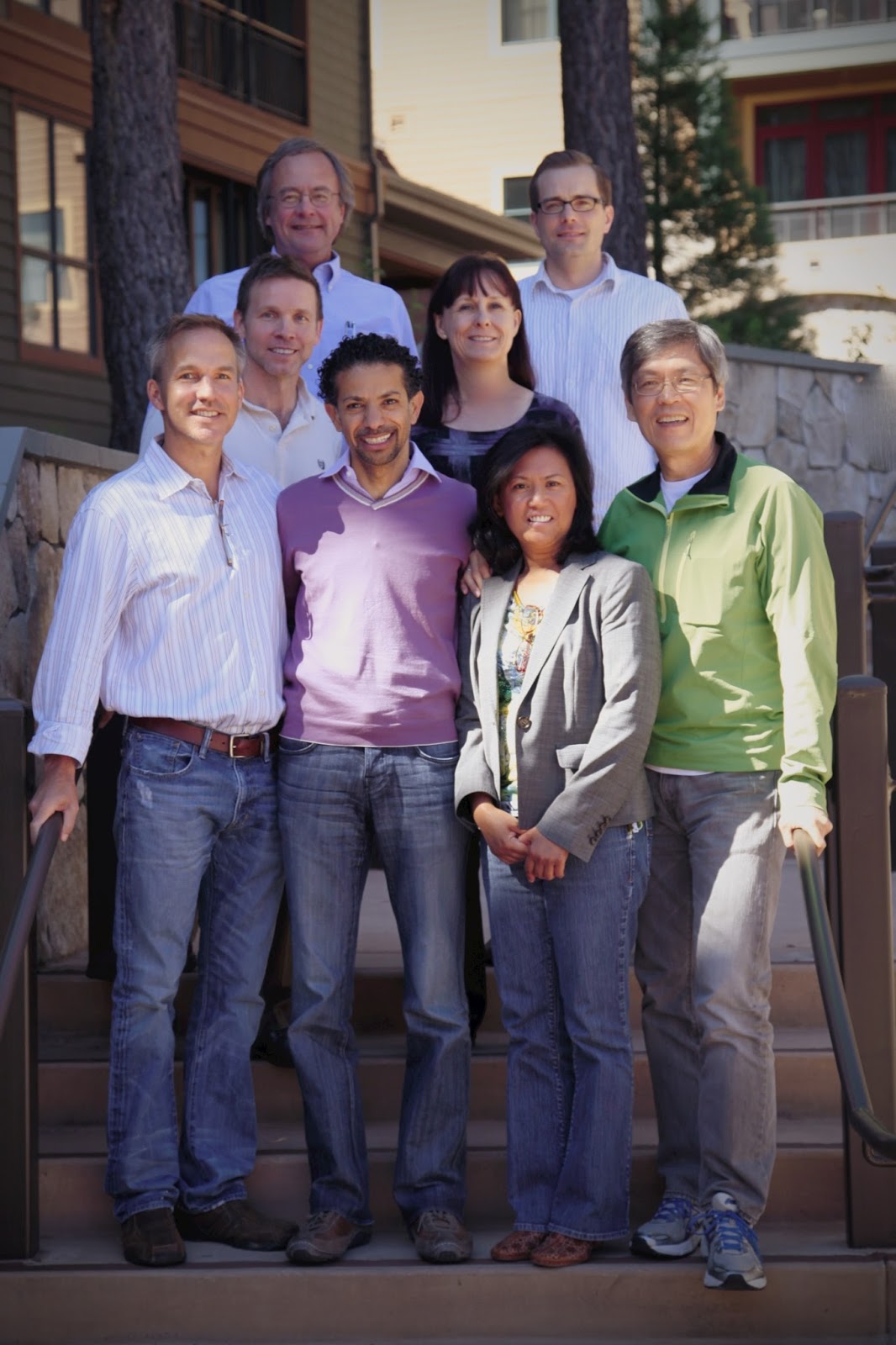
The College of American Pathologists Neuropathology Committee (pictured, minus the illustrious Dr. Aaron Wagner) poses the following question to the neuropathology community worldwide:

"If you were constructing a panel of eight biomarkers there were well-established prognostic/predictive markers for CNS neoplasms, what markers would be included? Note: this is not for diagnosis, but for predicting behavior and should include adult and pediatric brain tumors and can include immunohistochemical and molecular tests."

Thanks in advance for providing your opinion in the comments section.

Friday, May 31, 2013

Best Post of October 2012: IDH1 Mutations in Oligodendrogliomas: PNA-clamping PCR is best analytic method

Time for the next in our "Best of the Month" series.. At the time of it's original publication, Dr. Craig Horbinski had this to say about a study which had recently been published in Brain Pathology: "Only catch is whether the method is TOO sensitive. After all, if all oligos are positive for IDH1, why do the "inferior" IDH tests effectively stratify prognosis? I'll be keen to see if anyone else can replicate this work."

Here's the original post from October 22, 2012:

Although direct sequencing of mutations in isocitrate dehydrogenase 1 (IDH1) has been considered to be the gold standard method to detect this mutation, the sensitivity of this technique has been questioned especially because specimens from glial tumors may contain large numbers of non-tumor cells. The group screened 141 cases of oligodendroglial tumors for IDH1 mutations using peptide nucleic acid (PNA)-mediated clamping PCR and compared the results with the results of direct sequencing, pyrosequencing, and immunohistochemistry (IHC). Nested PCR was only performed in cases having mutant IDH1 only discovered by clamping PCR. Using dilution experiments mixing IDH1 wild-type and mutant DNA samples, clamping PCR detected mutations in samples with a 1% tumor DNA composition. Using PNA clamping PCR, the group detected 138 of 141 (97.9%) cases with mutant IDH1 in the series, which is significantly higher (P = 0.016; PNA clamping vs. direct sequencing) than those of direct sequencing (74.5%), pyrosequencing (75.2%), and IHC (75.9%). From these results, it appears that almost all oligodendroglial tumors have IDH1 mutations, suggesting that IDH1 mutation is an early and common event especially in the development of oligodendroglial tumors.

Monday, October 22, 2012

IDH1 Mutations in Oligodendrogliomas: PNA-clamping PCR is best analytic method

This is just out from a Korean group headed by Dr. Se-Hoon Kim publishing online in Brain Pathology:

Although direct sequencing of mutations in isocitrate dehydrogenase 1 (IDH1) has been considered to be the gold standard method to detect this mutation, the sensitivity of this technique has been questioned especially because specimens from glial tumors may contain large numbers of non-tumor cells. The group screened 141 cases of oligodendroglial tumors for IDH1 mutations using peptide nucleic acid (PNA)-mediated clamping PCR and compared the results with the results of direct sequencing, pyrosequencing, and immunohistochemistry (IHC). Nested PCR was only performed in cases having mutant IDH1 only discovered by clamping PCR. Using dilution experiments mixing IDH1 wild-type and mutant DNA samples, clamping PCR detected mutations in samples with a 1% tumor DNA composition. Using PNA clamping PCR, the group detected 138 of 141 (97.9%) cases with mutant IDH1 in the series, which is significantly higher (P = 0.016; PNA clamping vs. direct sequencing) than those of direct sequencing (74.5%), pyrosequencing (75.2%), and IHC (75.9%). From these results, it appears that almost all oligodendroglial tumors have IDH1 mutations, suggesting that IDH1 mutation is an early and common event especially in the development of oligodendroglial tumors.

Wednesday, September 12, 2012

DecisionDx-GBM: Should every glioblastoma patient be getting this test?

What does the neuropathology community think of DecisionDx-GBM? This is a product offered by Castle Biosciences, based in Phoenix, AZ. DecisionDx-GBM is a gene expression profile test developed at The University of Texas M. D. Anderson Cancer Center for the purpose of increasing the accuracy of the prognosis and predicted responsiveness of glioblastoma multiforme to first line radiation plus temozolomide. The test is able to distinguish GBM tumors with a proneural phenotype (tumor signature) from those with a mesenchymal / angiogenic phenotype. Patients with a proneural phenotype tumor who are treated with first line radiation plus temozolomide experience a significantly longer median survival (over 7 years) compared to those patients with a mesenchymal / angiogenic phenotype tumor (approximately 1 year). According to the company website, the assay has been fully validated and has been available for clinical use since 2008. A study is ongoing to determine whether the tumor molecular profile conferring a mesenchymal/angiogenic phenotype is associated with a selective increase in benefit from the addition of bevacizumab to temozolomide and radiotherapy. DecisionDx-GBM is also currently being incorporated into a number of other prospective and retrospective studies.

Is DecisionDx-GBM covered by insurance? Castle Biosciences states that the test receives reimbursement from a number of commercial insurance companies, and appeals to the Administrative Law Judge level for Medicare have resulted in favorable decisions for full payment. Should a patient need to pay out-of-pocket for this test, I could not find on the website what the cost would be.

Should we as neuropathologists recommend the use of this profile? Here is a an example of the kind of report that is generated when one orders the panel of 12 genes (3 of which are for control) upon sending a block of paraffin-embedded fixed tissue to the company. I would be interested in hearing people's opinions regarding this product, and whether there are others on the market which might be comparable. Please post!

Neuropathology Blog is Signing Off

Neuropathology Blog has run its course. It's been a fantastic experience authoring this blog over many years. The blog has been a source...