Monday, August 26, 2013

Best Post of March 2013: An oddball sellar region mass

The next in our "Best of the Month" series is from Friday, March 15, 2013:


In the last post, it was noted that Dr. Peter Burger presented a series of sellar region "oddball lesions" at the recent USCAP meeting. The esteemed Dr. Mark Cohen was good enough to provide photographs (above) of one particular lesion that was discussed at the meeting: an osteolipoma of the tuber cinereum. Thank you, Dr. Cohen!

Friday, August 16, 2013

What's on your tumor biomarker wish list?

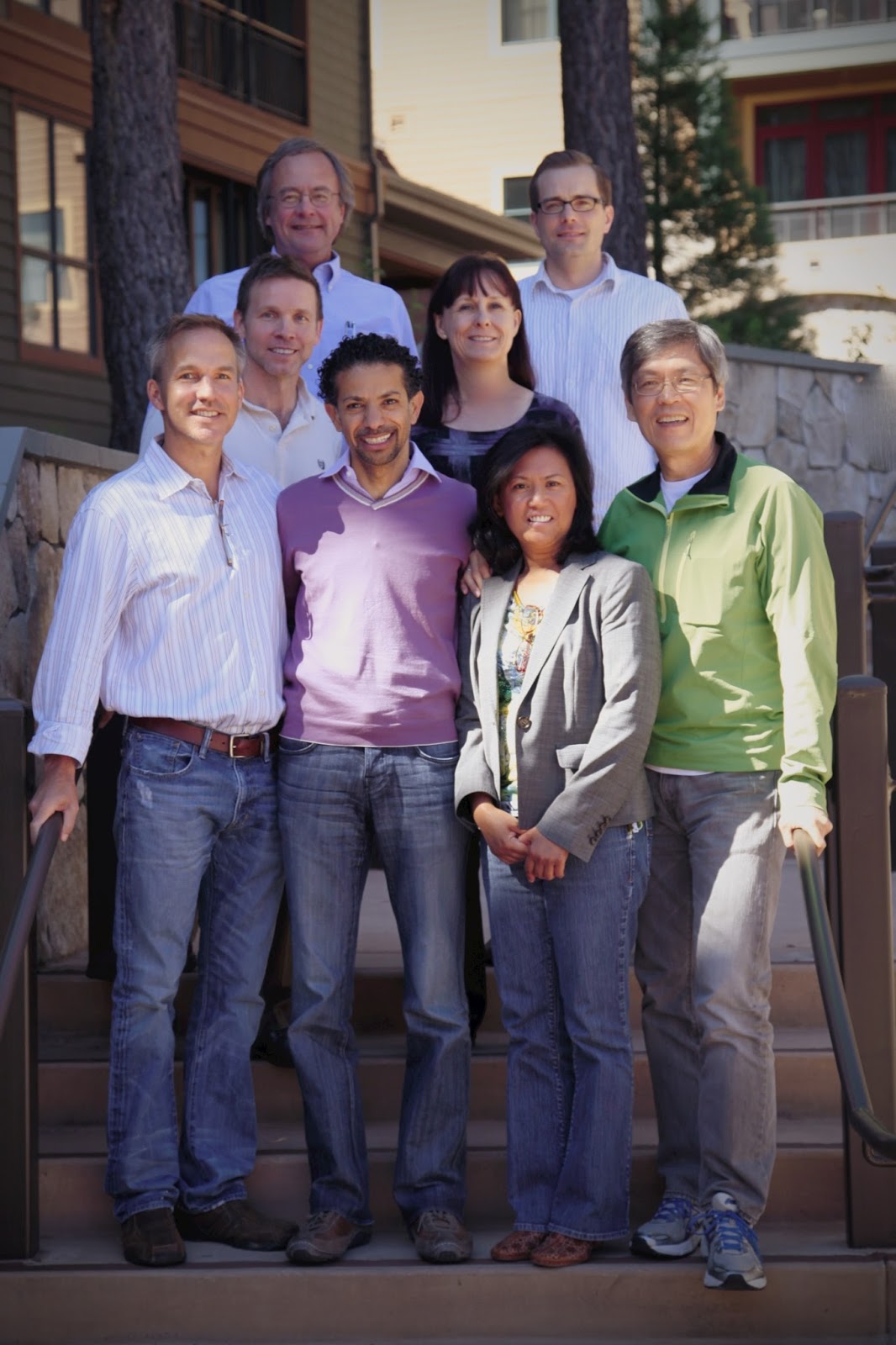
Photo courtesy of Shellie Sherrod
The College of American Pathologists Neuropathology Committee (pictured, minus the illustrious Dr. Aaron Wagner) poses the following question to the neuropathology community worldwide:

"If you were constructing a panel of eight biomarkers there were well-established prognostic/predictive markers for CNS neoplasms, what markers would be included? Note: this is not for diagnosis, but for predicting behavior and should include adult and pediatric brain tumors and can include immunohistochemical and molecular tests."

Thanks in advance for providing your opinion in the comments section.

Tuesday, August 13, 2013

Best Post of February 2013: Review by Dr. Mark Cohen of "Neuropathology: A Volume in the Hight Yield Pathology Series", edited by Yachnis and Rivera-Zengotita

The next in our "Best of the Month" series appeared on February 26, 2013:


Mark L. Cohen, MD
I am honored to present a guest post by the inimitable Dr. Mark Cohen of the illustrious Case Western Reserve University. Dr. Cohen not only reviews a great new neuropathology textbook, but illustrates yet again why he is widely known as the Maxwell Smart of Neuropathology.


(Not really) Full disclosure
Self-annihilating conflicts of interest, as follows:
  1. Long-standing professional relationship with unbridled admiration for lead editor Tony Yachnis, both as a person and as a pathologist (he's not the Moderator of the world-famous Diagnostic Slides Session of the American Association of Neuropathologists, as well as their President-Elect, for nothing).
  2. I have contributed to several publications that compete within the same niche, and from which I have amassed a small fortune (recently enabling me to purchase new windshield wipers for my ‘99 Corolla).
Several weeks ago, I received the following teaching evaluation from an anonymous medical student: "One of the worst lecturers that I had the misfortune of experiencing in medical school. Powerpoints were poorly constructed in terms of high yield content...”. So, when our host Dr. Moore blogged about the impending publication of Neuropathology: A Volume in the High Yield Pathology Series, I sprinted to my laptop to pre-order a copy.
Anthony T. Yachnis, MD, MS
The book arrived safely last night (albeit buried in several inches of snow), and I was not disappointed. Best described as Text-Atlas, it weighs in at 351 pages, which is roughly half that of both Perry & Brat’s Practical Surgical Neuropathology and Prayson’s Neuropathology, second edition. In addition, it represents something of a revolutionary approach in that it was primarily written by trainees in pathology, neuropathology, dermatopathology, hematopathology and neurosurgery. This team-based approach (a testament to Captain Tony’s coaching skills) has produced a neuropathology text “of the people, by the people, and for the people”, as well as resulting in a textbook which is remarkably up to date (including such topics as Natalizumab-related PML). In addition to an introduction to basic neuropathological reactions, subjects covered include developmental disorders (both malformative and acquired), cerebrovascular disorders, trauma, brain tumors, infectious diseases, neurodegenerative disorders, demyelinating diseases, toxic/metabolic disorders, and neuromuscular disorders. For a book of this size, the scope of the topics covered is remarkably comprehensive, and they are extensively, if not exhaustively, illustrated. The pictures, especially the gross photographs, are of uniformly high quality (which appears to be maintained in the on-line version, unlike another high-profile textbook I reviewed a few years ago). In addition to the beautifully photographed gross specimens, pictures include histochemistry, immunohistochemistry, and neuroimaging, as appropriate. The vast majority of the photographs are reproduced at 3.25 x 2.5 inches, which is more than adequate to appreciate the features described in the figure legends. With rare exceptions, arrows are not included within the photomicrographs (which I feel is appropriate, but has gotten me in trouble with certain journals, publishers, and students). As is the practice within this series of textbooks, as well as in many other currently published pathology books, the text is entirely bulleted (a practice which I personally dislike, but which is executed quite well here). Another feature that the reader should be aware of is that (no doubt as part of the philosophy of “high-yield pathology”) there are no references.
Marie Rivera-Zengotita, MD
As an academic neuropathologist, do I have criticisms? (Do bears sh...?). Besides minor quibbles with organization (I probably would have included Natilizumab-associated PML within the Infections section rather than as part of multiple sclerosis) and such Talmudic issues as whether brain invasive meningiomas are truly atypical or not really atypical, but still WHO Grade II, I think that the improvements that I would suggest are largely outside the purview of the authors and editors. Specifically, the titling typography and design layout is nothing short of hideous, and, although the pictures are of adequate size, the presence of many nearly blank pages certainly makes me wish that those spaces had been filled by larger format photographs. In addition, a few of the topics are presented sans photographs, which detracts somewhat from the flow of the textbook (although the authors had the good sense of not trying to illustrate mixed oligoastrocytomas). All in all, however, I think that the book succeeds in its aspirations of presenting "high yield neuropathology".
The editors hope that the volume will be useful for trainees in pathology, neurology, neurosurgery, neuroradiology, neuro-oncology and related fields; as well as being a practical reference for practicing pathologists -- including neuropathologists requiring quick access to the field. As I was reading through the text, I kept this in mind, and triaged these groups as follows:
  1. Neurology and neurosurgery residents should run, not walk, to order a copy, as Board examinations are near at hand, and this book provides a perfect study guide for preparation. Neuropathology fellows should also obtain a copy for studying, although at this moment they have time to walk to their laptops or bookstore.
  2. Neuroradiologists and anatomic pathologists should obtain a copy to keep as a quick reference
  3. Neuro-oncologists will probably gravitate towards more specialized textbooks (such as the recent addition to the Diagnostic Pathology series edited by PCB et al.)
  4. As far as practicing neuropathologists go, I think we all need a copy as we generally find ourselves in one of two situations:
    1. A private practice or group setting without instantaneous access to literature databases. For this group, I think the book fulfills its goal as a quick access to diseases with which we may have become unacquainted during our time in practice.
    2. A large academic medical center with broadband access to literature databases. In this position, our quick access will generally be on-line. On the other hand, we should all have a copy to lend to clinical rotators as an expression of our great goodwill. (Another minor weakness of the book is that there is no RFID device by which we can geolocate our books once they have left our offices. On the other hand, the included on-line access assures that even as our copies disappear, we will still have access from our computers).
Unfortunately, while I feel this book will definitely help to guide me in the revision of my medical student lectures, it is by itself not appropriate for medical student study. To paraphrase Jack Nicholson as Col Nathan R. Jessup, USMC in A Few Good Men: You want high yield? You can’t handle high-yield!
Luckily, for those who can handle the truth, Neuropathology: A Volume in the High Yield Pathology Series will provide a valuable and lasting resource.

Thursday, August 1, 2013

Featured Neuropathologist: PJ Cimino, MD, PhD

Today I profile Dr. PJ Cimino, a prominent first-year neuropathology fellow at Washington University in St. Louis. After a short biographical sketch, Dr. Cimino answers a few of my questions:


Dr. PJ Cimino

P.J. Cimino grew up in Seattle, WA, where he did both his undergraduate studies (double major in neurobiology and biochemistry) and Medical Scientist Training Program (combined MD/PhD program) at the University of Washington. He earned his PhD in Neurobiology and Behavior while working in the laboratory of Tom Montine MD, PhD in the Department of Pathology. His graduate work mainly focused on the biology of microglia related to prostaglandin signaling and neurodegenerative disease. He graduated in 2011 and moved his family from Seattle to the Midwest to train in the combined Anatomic Pathology (AP)/Neuropathology (NP) program at Washington University in St. Louis, MO. He has completed hist first two years of AP training and is now in the NP fellowship portion. During his time in St. Louis he has also developed a budding interest in molecular neuro-oncology. In addition to gaining experience in diagnostic neuropathology, he plans to return to the laboratory bench in order to continue on his track to become an independent physician-scientist in investigative neuropathology. P.J. is married to Heather, and they have three children: Sadie, Dominic, and Francis.

1.       What does the PJ stand for?

Patrick Joseph.

2.       Why did you decide to become a neuropathologist?

The short answer is that neuropathology just fits with my personality and interests. As an undergraduate I was fascinated by neurologic disease and worked in a laboratory that studied the genetics of inherited neurological disorders. After making the decision to become a physician-scientist, I knew that I was drawn to the field of neurology. As many people of my ilk do, I spent time exploring neurosurgery, neurology, psychiatry, neuropathology, etc. I was fortunate enough as a graduate student to join the lab of a great neuropathologist, who showed me what neuropathology was like. After exploring all of those 'neuro' options, neuropathology was the right fit for me. I think it will afford me the opportunity to study the mechanism of neurologic disease while having a hand in patient care.

3.       Name a couple of important professional mentors. Why were they important to you?

Beginning in chronological order, I first have to recognize my undergraduate research mentor at the University of Washington, Wendy Raskind MD, PhD. She was the first person to inspire me to become a physician-scientist. I saw how she managed patients clinically as well as ran a basic science research lab, and used these two endeavors to complement and enhance one another. The next important mentor has to be Tom Montine MD,PhD, as mentioned above. He initially got me interested in neuropathology, and essentially helped me to solidify my career goals. He has helped me tremendously over the past several years and still provides much needed sound guidance. In the past couple of years I have gained some newer and emerging professional mentors at Washington University in St. Louis, including BobSchmidt MD, PhD and David Gutmann MD, PhD. I do want to acknowledge that this list is not comprehensive and I am a product of several other great professional mentors that I have met along the way.

4.       What advice would you give to a pathology resident interested in doing a neuropathology fellowship?

Do it! I have met academic neuropathologists and private practice pathologists who have completed neuropathology training. So there appears to be many career choices for those with neuropathology fellowship training. I think that the vast majority of neuropathologists (again in my experience) need to have a skill in addition to neuropathology. So in addition to NP training, you should consider either doing another pathology fellowship (clinical track) or a post-doctoral fellowship/mentored research (research track).  You just have to take into consideration your personal and professional goals and plan your training appropriately. For full disclosure to residents, I cannot provide comprehensive advice about neuropathology and what lies beyond fellowship training, because I am still in training myself. Hopefully, I will get a 'real job' someday as an academic neuropathologist and I can add to this advice in the future.

5.       What city would you like a future American Association of Neuropathologists meeting to be held and why?

I think that any city in the Pacific Northwest or Mountain region would be a good place to hold a national meeting that takes place in the end of June. These include: Denver, Seattle, Portland, Salt Lake, etc. I think that the end of June is a good time to head North and West to cool down for a few days while looking at posters, going to talks, and attending the diagnostic slide session. The organizers must have anticipated my response to this question, as they have preemptively scheduled the 2014 meeting to take place in Portland, OR.

Monday, July 29, 2013

Children's Oncology Group Seeking Applicants for Young Investigator Program


Dr. Chris Pierson
I heard today from Dr. Christopher Pierson, neuropathologist and vice-chair of Children's Oncology Group Young Investigators. He asked me to share the following announcement about a fantastic program:

The Children’s Oncology Group Young Investigator (COG YI) mentor/mentee program is currently soliciting applications for potential mentees. The purpose of this program is to provide an opportunity for a junior pathologist to work with a senior pathologist and possibly advance toward serving as part of central pathology review for COG protocols and/or serving on COG committees. The program pairs a young investigator with a senior member of the COG pathology discipline who provides mentorship to the young investigator while executing a research project based on a tumor type or topic of mutual interest. YI mentees are expected to present their progress at the yearly fall COG meeting. The program does not fund specific research projects, but can help direct individuals to other funding sources if needed. Limited funds may or may not be available from COG to defray the cost of travel for mentees to attend yearly COG meetings.

Requirements for potential mentee:         
1.         Children’s Oncology Group (COG) Member
2.         Less than 5 years from completion of fellowship/residency 
3.         Precise area of interest within a specific pediatric tumor
4.         Completed application (see below)

An optimal mentee is an individual with a defined focus in a specific pediatric tumor. Mentees should submit a project proposal related to this area of interest that utilizes resources unique to the COG, such as H+E slides, paraffin sections, tissue microarrays, and in some cases frozen samples.  

This three-year program is aimed to provide guidance to COG young investigators who have matured in their career to a level of interest in one particular pediatric tumor.  Those who are still exploring or examining various subjects within pediatric tumors should not apply. Interested applicants must apply by September 30, 2013.

To apply for the COG YI pathology mentorship program, please prepare the following:
1.      Project proposal (1-2 pages with brief description of background, hypothesis, proposed methods, and brief references).
2.            Curriculum vitae
3.            Letter of support from Department Chair
4.            Documentation of COG membership (can be obtained at the COG website)

Completed applications should be sent to:

Chris Pierson, M.D., Ph.D
COG Pathology Discipline YI Liaison
Vice-Chair, COG YI Committee
Christopher.pierson@nationwidechildrens.org

Thursday, July 25, 2013

What about this cell with red granular cytoplasm?

I'm working on a high-grade glioma and am coming across scattered presumably neoplastic cells that have course red granular cytoplasm. How does one interpret such cells? Does it raise the possibility of a granular cell astrocytoma? Or are these often present and I've just ignored them until now? Thanks for any help you might be able to provide in the comments section!

Tuesday, July 16, 2013

Disgruntled lab worker arrested in murder of neuropathologist Roger Brumback and three others


I had reported in May of this year on the tragic death of Dr Roger Brumback. Here is a follow-up on the case from CNN:


updated 8:34 PM EDT, Mon July 15, 2013

(CNN) -- Police arrested a former Creighton University lab worker Monday for two double homicides over five years, both sets of victims were connected to the pathology department at the Nebraska school.

Anthony Joseph Garcia, 40, was arrested during a traffic stop in Illinois, Omaha Police Chief Todd Schmaderer said. Officers were making preparations to arrest him Tuesday, but the Indiana resident "became mobile" and police felt they needed to arrest him right away, he said.

Garcia was arrested on four counts of first-degree murder in the May deaths of Roger and Mary Brumback, both 65, and the March 2008 deaths of 11-year-old Thomas Hunter and his family's housekeeper, Shirlee Sherman.

All lived in Omaha.

Roger Brumback was a professor in the pathology and neurology departments at Creighton and announced his retirement shortly before he was killed.

Thomas Hunter's father, Dr. William Hunter, is a faculty member in Creighton's 12-person pathology department. The boy's mother, Dr. Claire Hunter, is an associate professor in Creighton's cardiology division.

Garcia worked in the pathology lab from July 2000 until June 2001, when the Brumbacks and William Hunter fired him, said Omaha Police Officer Michael Pecha. CNN affiliate KETV said Garcia was fired for "erratic behavior."

An Omaha task force had been monitoring Garcia "for some time," Schmaderer said. He was pulled over for suspected alcohol impairment and was found with a .45 handgun.

Authorities believe Garcia acted alone, Schmaderer said.

It's not clear where Garcia was working at the time of his arrest.

Thursday, July 11, 2013

New Muscle Pathology Text edited by Goebel, Sewry, and Weller out next month

The second edition of Muscle Disease: Pathology and Genetics will be released in August 2013. The publisher states that the book "clarifies the pathology and genetics of muscle disease for pathologists, clinicians, geneticists and researchers to aid in the diagnosis and management of patients. Organized around the 'motor unit' concept, this book presents the latest understanding of muscle disease, and how this can help identify new treatments."

Tuesday, July 9, 2013

Best Post of January 2013: The Biggest Alzheimer Disease Discovery in 2012


Kári Stefánsson
The next in our "Best of the Month" series is from January 4, 2013:

Perhaps the biggest discovery in the Alzheimer research world last year was the identification of a mutation in APP that significantly decreases its cleavage by β-secretase, leading to 40% less production of amyloidogenic peptides in vitro. The researchers found the mutation (A673T) in the APP gene protects against Alzheimer’s disease and cognitive decline in the elderly without Alzheimer’s disease.

Future drugs that can recreate this Aβ-reducing effect “should perhaps be given not only to people at risk of Alzheimer’s but to all elderly people,” says Kári Stefánsson, senior investigator of the study, which came out of Iceland and appears online in Nature.

Friday, July 5, 2013

International Congress of Neuropathology to be held for the first time ever in Latin America

The XVIIIth International Congress of Neuropathology will be held in Rio de Janeiro, Brazil, the first time ever in Latin America, on 14-18 September 2014. It will be organized by Brazilian and Argentinian neuropathologists and an international scientific committee will be established to plan the Congress programme. Organizers say the emphasis will be on promoting the exchange of expertise between the different branches of neuropathology and allied fields of neuroscience.

Neuropathology Blog is Signing Off

Neuropathology Blog has run its course. It's been a fantastic experience authoring this blog over many years. The blog has been a source...